
Simple Anxiety Journal Template to Calm Your Mind
An anxiety journal template is a simple tool that helps people write down their thoughts and feelings. It gives a clear structure for daily journaling. People can use it to track worries, emotions, and triggers. Writing things down can make thoughts feel less overwhelming. It also helps the mind slow down and become more organized.
Many people feel anxiety but do not know how to express it. Thoughts keep repeating in the mind and create stress. A journal can be a safe place to release these feelings. When you write regularly, you start to notice patterns in your emotions. This can help you understand what causes your anxiety.
A simple anxiety journal template usually includes sections for daily thoughts, feelings, and reflections. Some templates also include prompts to guide your writing. These prompts make journaling easier, even if you are new to it. Over time, this small habit can help calm your mind and improve emotional awareness.
Anxiety Journal Template

An anxiety journal template is a simple format that helps you write about your thoughts and feelings. It gives you clear sections to follow, so journaling feels easier. You may write about what made you anxious, how you felt, and what helped you cope. This structure makes it easier to organize your thoughts. It also helps your mind feel a little calmer.
Using a journal template can make daily writing more helpful. You begin to notice patterns in your worries and emotions. Over time, you may understand what triggers your anxiety. This awareness can help you find better ways to manage stress. Even a few minutes of writing each day can support your mental well-being.
Why Journaling Helps With Anxiety
Journaling helps people release their thoughts and feelings. When anxiety builds up, the mind can feel crowded. Writing things down can clear some of that mental noise. It helps you understand what you are feeling and why. Seeing your thoughts on paper can make them feel less overwhelming.
Journaling also creates a safe space to express emotions. You can write without fear of judgment. Over time, it can help you notice patterns in your worries. This makes it easier to manage stress and find solutions. Even a few minutes of writing each day can bring a sense of calm.
Daily Anxiety Journal Template
A daily anxiety journal can help you understand your thoughts and feelings. It gives you a simple way to slow down and reflect on your day. Writing a few lines each day can make your mind feel lighter. There is no need to write a lot. Just focus on what you are feeling at the moment.
You can follow a simple template to guide your writing. These small prompts make journaling easier and more helpful. For example, you can write about:
- How I feel today
- What made me anxious today
- Thoughts that kept repeating in my mind
- One thing that helped me feel calm
- Something I am grateful for today
Using this format every day can help you notice patterns in your anxiety. Over time, you may also see what helps you feel better and more in control.
Tips for Journaling Daily
Journaling every day can help you manage anxiety and understand your emotions. It’s important to keep it simple and consistent. You do not need perfect writing or long pages. Just write honestly about how you feel. Even a few minutes each day can make a difference.
Creating a small routine can make journaling easier. Choose a quiet time when your mind feels calm. Some people prefer writing in the morning, while others write before bed. The goal is to make journaling a healthy daily habit.
| Tip | Explanation |
| Choose a Set Time | Pick the same time each day for journaling. This helps turn it into a daily habit. |
| Start Small | Write for 5–10 minutes. Short writing sessions are easier to maintain. |
| Be Honest | Write your real thoughts and feelings. Your journal is a safe space. |
| Do Not Worry About Grammar | Focus on expressing your thoughts, not on perfect writing. |
| Use Simple Prompts | Prompts like “How do I feel today?” can help you start writing. |
| Keep Your Journal Nearby | Place your journal somewhere easy to see so you remember to write. |
| Write Freely | Let your thoughts flow without overthinking. Just write whatever comes to mind. |
| Reflect on Your Day | Think about what made you happy, stressed, or anxious during the day. |
| End With Gratitude | Write one thing you are thankful for. This helps shift your focus to positive thoughts. |
| Stay Consistent | Try to journal every day, even if you only write a few lines. |
Anxiety Journaling Prompts

An anxiety journal template can help you explore your thoughts and feelings. It gives you a simple place to start writing every day. There is no need to write a lot. Just answer honestly and focus on what you are feeling. Using a template makes it easier to notice patterns in your emotions.
Some prompts you can use are: What made me anxious today? How did my body feel? How did you keep repeating the same thoughts?Can you tell me what helped me feel calm? I am grateful for what? Following an anxiety journal template daily can reduce stress and help you feel more in control of your anxiety.
Common Mistakes to Avoid in Anxiety Journaling
When using an anxiety journal template, one common mistake is overthinking what you write. Your journal is for you, not for anyone else. Worrying about grammar or spelling can stop you from writing freely. Focus on your thoughts and feelings, not on perfection.
Another mistake is being inconsistent with your anxiety journal template. Skipping days makes it harder to notice patterns in your anxiety. Only writing when you feel bad can create a negative habit. You should write every day, even when you feel calm. This helps make journaling a steady and helpful practice.
Long-Term Benefits and Progress Tracking
Keeping a daily anxiety journal can bring long-term benefits. Over time, you start to notice patterns in your thoughts and feelings. This helps you understand what triggers your anxiety. Writing regularly can also show how your coping strategies are working. Tracking your progress makes it easier to feel in control and less overwhelmed.
You can use simple ways to track your progress, such as:
- Note your anxiety levels each day (low, medium, high)
- Record triggers that caused anxiety
- List coping strategies you tried and how they helped
- Write one small win or positive moment daily
- Reflect weekly on any improvements or patterns
By tracking your progress, you can see growth over weeks and months. This encourages consistency and helps make journaling a powerful tool for managing anxiety.
Managing Intrusive Thoughts
Intrusive thoughts can feel scary or overwhelming. They often appear suddenly and make you anxious. Journaling can help by giving you a safe space to write them down. Writing your thoughts makes them less powerful. It also helps you understand patterns and triggers.
Here are some simple ways to manage intrusive thoughts:
| Technique | How It Helps | Example |
| Label the Thought | Recognize it is just a thought, not a fact | “This is an anxious thought, not reality.” |
| Write It Down | Release the thought from your mind | Journal the intrusive thought without judgment |
| Challenge the Thought | Question its truth | Ask yourself: “Is this really true?” |
| Practice Mindfulness | Stay present and focused | Focus on your breath or surroundings |
| Replace with Positive Thought | Shift your focus | Think: “I am safe and in control.” |
| Set a Worry Time | Limit when you engage with thoughts | 10 minutes in the evening to reflect, then move on |
| Use Gratitude | Focus on positive moments | Write one thing you are grateful for today |
| Seek Support | Talk to a friend or therapist | Share your thoughts with someone you trust |
Using these techniques with a journal helps reduce the power of intrusive thoughts over time. Regular practice can make your mind calmer and your anxiety easier to manage.
Cycle of Avoidance in Anxiety
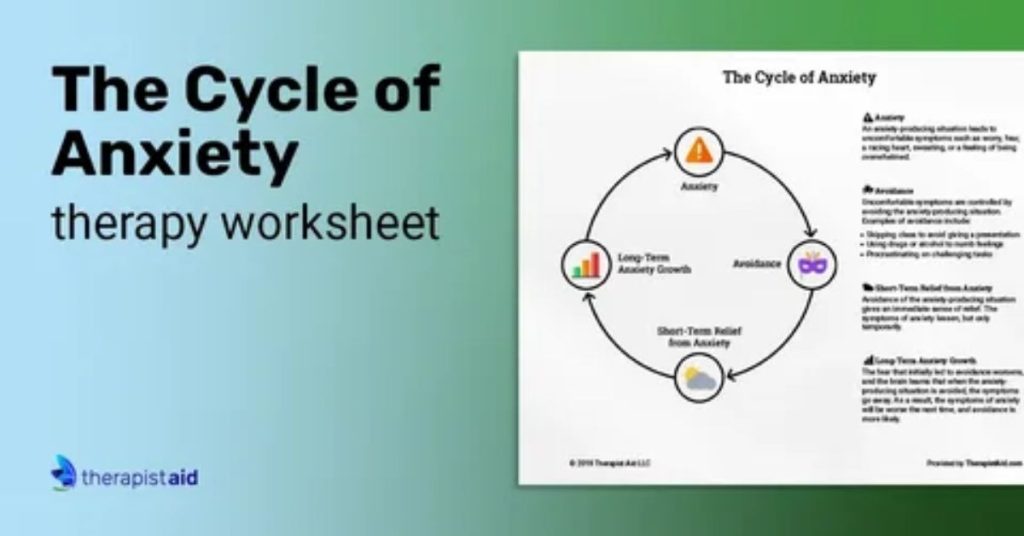
The cycle of avoidance happens when we try to escape things that make us anxious. Avoiding these situations may give short-term relief. But in the long run, it can make anxiety stronger. The more we avoid, the more our fears grow. Using an anxiety journal template can help you track these patterns and understand your triggers.
Journaling with an anxiety journal template can also help break the cycle. Writing about your fears and avoidance makes them easier to see. You can plan small steps to face anxiety safely. Over time, this practice helps reduce fear and build confidence.
Finding Professional Anxiety Support
Sometimes anxiety feels too big to handle alone. Seeking professional support can help you manage it better. Therapists and counselors are trained to guide you through anxiety. They can teach coping skills and strategies that work for you. Using an anxiety journal template alongside therapy can help track your progress and emotions.
Finding support can start with small steps. You can ask your doctor for a referral or search for licensed therapists online. Support groups are also helpful, as talking to others who understand can reduce stress. Combining professional help with an anxiety journal template creates a strong plan for managing anxiety.
Conclusion
Journaling is a simple and powerful way to manage anxiety. Using an anxiety journal template can make it easier to organize your thoughts and track your feelings. Writing even a few minutes each day helps you feel calmer and more aware of your emotions.
Over time, an anxiety journal template can help you notice patterns, track progress, and reduce stress. Combined with small coping strategies or professional support, it makes managing anxiety easier. Remember, there is no perfect way to journal,honesty with yourself is what matters most.
FAQs
1. What is an anxiety journal template?
An anxiety journal template is a guide with prompts to help you write about your thoughts and feelings daily.
2. How often should I use an anxiety journal template?
Try to write every day, even for a few minutes, to track patterns and progress.
3. Can journaling reduce anxiety?
Yes, journaling helps release stress, understand triggers, and manage anxious thoughts.
4. Do I need to write perfectly in my journal?
No, focus on honesty and expressing your thoughts,grammar or spelling does not matter.
5. Can I use a journal alongside therapy?
Absolutely, an anxiety journal template works well with professional support to track progress and coping strategies.