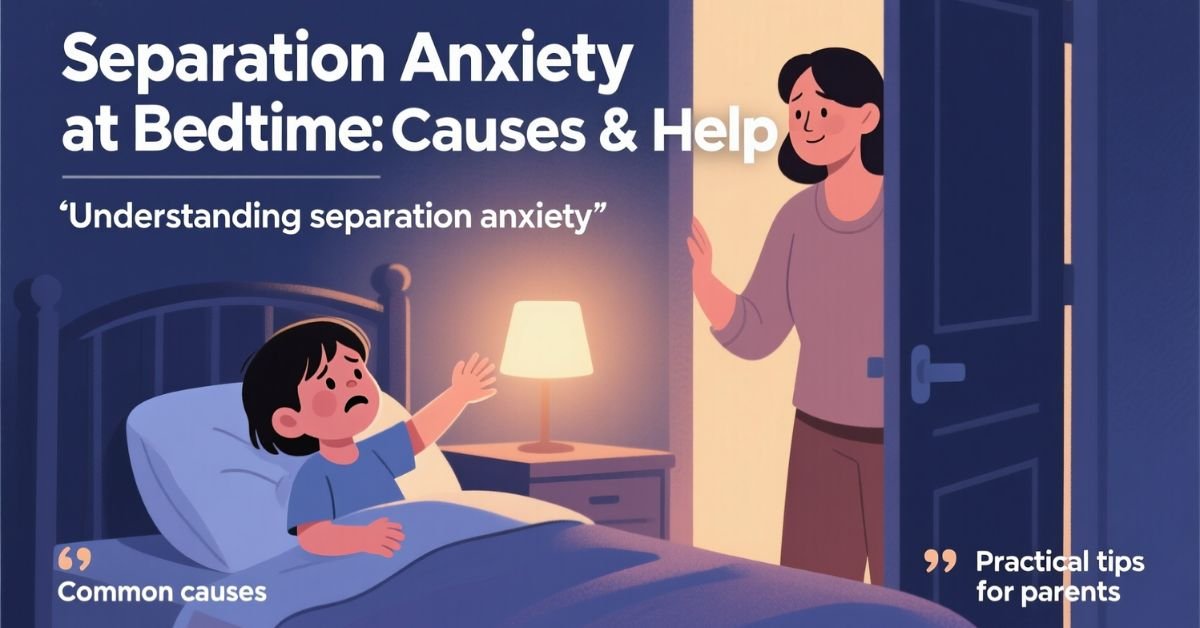
Separation Anxiety at Bedtime: Causes & Help
Separation anxiety at bedtime is when a baby or toddler becomes anxious, clingy, or upset at night because they don’t want to be away from their parents. It is a common developmental stage that usually starts in infancy and can affect sleep routines. Children may cry, call out for parents, or struggle to fall asleep on their own.
For parents, dealing with separation anxiety at bedtime can be stressful and exhausting. It’s hard to see your child upset and even harder when the entire family is losing sleep. The good news is that this stage is temporary, and with the right strategies, you can help your little one feel secure and calm at night.
In this article, we’ll explore the causes of separation anxiety at bedtime, signs to watch for, and practical tips to make nights smoother for both you and your child.
What is Separation Anxiety in Babies?
Separation anxiety at bedtime is a normal stage of development for babies. It happens when little ones realize that parents or caregivers are not always nearby. Babies may cry, cling, or refuse sleep because they want comfort and security. This stage usually begins in the first year and shows that your baby is forming a strong bond with you.
Many families notice separation anxiety at bedtime when their baby struggles to fall asleep or wakes often during the night. It can feel stressful, but it is a healthy sign of attachment. With gentle routines, comfort objects, and consistency, babies slowly learn that bedtime is safe even if parents are not right beside them.
When Do Babies Experience Separation Anxiety?
Babies usually start showing signs of separation anxiety around 6 to 8 months old. At this age, they begin to understand that you exist even when they cannot see you. This new awareness makes them feel uneasy when you leave the room. Separation anxiety often peaks between 10 to 18 months, but every baby is different.
Some babies may only feel it for a short time, while others experience it longer. It can appear during the day or as separation anxiety at bedtime. Bedtime can be especially hard because babies are left alone in the dark. The good news is that this stage is normal and usually improves as children grow and gain confidence.
What Causes Separation Anxiety in Babies at Night?
Separation anxiety at bedtime is common because night feels different from daytime. Babies notice the change in light, sound, and routine. They realize parents are not nearby, and this makes them feel unsafe. Darkness and quiet can also make babies more aware of being alone.
Several factors can trigger separation anxiety in babies at night:
- Growing awareness that parents are separate from them
- Fear of being left alone in the dark
- Changes in daily routine or sleep environment
- Developmental milestones, like crawling or walking, that increase independence
- Illness, teething, or overtiredness that makes babies more clingy
Signs of Separation Anxiety in Babies at Night
Separation anxiety at bedtime can show in many small ways. Babies may cry when you leave the room, wake often during the night, or resist being put in their crib. They want to know you are close, and their behavior is their way of asking for comfort. This stage is hard, but it is also a sign of strong bonding.
Some babies show more clear signs than others. Parents may notice changes in sleep patterns, mood, or behavior. Below is a table that highlights common signs of separation anxiety in babies at night.
| Signs | What It Looks Like | Why It Happens |
| Crying at bedtime | Baby cries when parent leaves the room | Fear of being alone and missing parent’s presence |
| Frequent night waking | Baby wakes many times during the night | Seeking comfort and reassurance that parent is nearby |
| Clinginess at bedtime | Baby resists being put down in crib | Wants physical closeness and feels safe in parent’s arms |
| Refusing to sleep alone | Baby only falls asleep if parent stays close | Anxiety of being left without caregiver support |
| Increased fussiness | Baby becomes irritable around bedtime | Stress and discomfort caused by separation |
| Trouble napping during the day | Baby struggles with short naps or fights sleep | Same separation feelings carry over into daytime naps |
| Calling or reaching for parent | Baby stretches arms or calls out when parent leaves | Desire for reassurance and fear of separation |
| Sleep regression | Baby’s sleep routine changes suddenly, with more night waking | Separation anxiety at bedtime can disrupt normal sleep cycles |
Can Separation Anxiety Cause Sleep Regressions?
Yes, separation anxiety at bedtime can lead to sleep regressions. A baby who once slept well may suddenly start waking more often. This happens because the child feels uneasy when the parent is not nearby. The need for comfort can interrupt normal sleep patterns.
Sleep regressions caused by separation anxiety are temporary. They often happen when babies reach new stages of growth or learning. While it can be exhausting for parents, this phase usually improves with time. Gentle routines, comfort objects, and patience can help babies return to more peaceful sleep.
How to Deal With Nighttime Separation Anxiety?
Separation anxiety at bedtime can feel hard, but simple steps make it easier. Keep a calm and steady bedtime routine so your baby knows what to expect. Use soft lighting, gentle words, and extra cuddles before sleep. A comfort object, like a blanket or stuffed toy, can also help your baby feel safe when you are not there.
Stay consistent when your baby wakes during the night. Go in, comfort them, and then gently guide them back to sleep. Avoid rushing or sneaking away, as this can make them more anxious. Over time, your baby learns that bedtime is safe and that you always return. Patience and love are the keys to helping your little one adjust.
Tips for Reducing Baby Separation Anxiety at Night
Separation anxiety at bedtime is normal, but there are gentle ways to make it easier. Babies feel safe when bedtime looks and feels the same every night. A steady routine helps them know what comes next. Extra cuddles, songs, or reading can also create comfort before sleep. A calm environment reduces fear and builds trust.
Here are a few simple tips parents can try:
- Keep a consistent bedtime routine
- Offer a comfort object, like a blanket or toy
- Spend quiet one-on-one time before bed
- Use soft lights or a night lamp in the room
- Respond with calmness when your baby cries at night
Can a Lovey or Transitional Object Help With Separation Anxiety?
Yes, a lovey or transitional object can help with separation anxiety at bedtime. Babies often feel more secure when they have something soft and familiar to hold. A blanket, stuffed toy, or small cloth can remind them of comfort and safety. This makes it easier for them to fall asleep and stay calm when parents are not nearby.
Choosing the right lovey depends on your baby’s age and needs. It should be safe, easy to wash, and soft to touch. Below is a table with examples of common transitional objects and how they can help with separation anxiety.
| Transitional Object | How It Helps | Safety Tips |
| Soft blanket | Provides warmth and comfort, feels like parent’s touch | Use a small, breathable blanket; avoid large heavy blankets for infants |
| Stuffed animal | Gives a sense of companionship and security | Choose one with no small parts or buttons that can come loose |
| Cloth or “lovey” square | Easy for baby to hold and cuddle, carries familiar scent | Wash often to keep it clean; make sure edges are secure |
| Parent’s worn t-shirt | Smells like parent, offers comfort when baby feels alone | Use only under supervision, not loose in the crib for very young infants |
| Teething toy with fabric | Combines comfort with relief for teething babies | Ensure it is safe, non-toxic, and regularly cleaned |
| Small pillow (for toddlers) | Provides comfort and signals sleep time | Only safe for toddlers over 18 months old |
When to Talk to a Doctor
Separation anxiety at bedtime is usually a normal part of development. Most babies grow out of it with time and gentle support. But sometimes the anxiety may feel too strong or last longer than expected. If your baby’s sleep troubles seem extreme, it may be a good idea to ask a doctor for guidance.
Talk to a doctor if your baby cries for many hours every night, refuses to sleep at all, or shows signs of stress during the day. A doctor can check if there are other causes, like illness or sleep disorders. They can also give advice and reassurance to help both you and your baby rest better.
The Bottom Line (Takeaway)
Separation anxiety at bedtime is a normal stage in your baby’s growth. It shows that your child is learning to bond and trust you. While it can be tiring and emotional, it usually passes with time. Most babies settle into healthy sleep once they feel safe and supported.
The best approach is patience, love, and consistency. Gentle routines, comfort objects, and calm responses can make a big difference. If the anxiety feels too overwhelming, do not hesitate to reach out for help. With support, both you and your baby can enjoy more peaceful nights.
Conclusion
Separation anxiety at bedtime can be hard for both parents and babies. The crying, clinginess, and sleepless nights may feel endless, but this stage is a normal part of growing up. It means your baby loves you and wants to feel close to you.
With time, gentle care, and steady routines, most babies learn that bedtime is safe. Parents may feel tired, but patience and comfort go a long way. Remember, you are not alone in this journey, and better sleep for your little one will come.
FAQs
1. Is separation anxiety at bedtime normal?
Yes, separation anxiety at bedtime is very common and part of normal development.
2. When does it usually start?
It often begins around 6 to 8 months and may peak between 10 and 18 months.
3. How long does it last?
It is temporary and usually improves as babies grow and feel more secure.
4. Can it cause sleep problems?
Yes, it may lead to night waking, crying, or trouble falling asleep alone.
5. How can parents help?
By keeping a calm routine, offering comfort, and staying consistent, babies feel safer at night.
Sinus Pressure Anxiety Symptoms Guide
Sinus pressure anxiety is a condition where sinus discomfort and anxious feelings happen together. It can cause pressure in the forehead, cheeks, or around the eyes. At the same time, you may notice a fast heartbeat or worried thoughts. Sinus pressure anxiety can feel scary because the symptoms affect both the body and the mind.
Have you ever felt facial pressure and suddenly feared something serious was wrong? That fear can make the discomfort feel stronger. Stress tightens muscles and affects breathing patterns. This can increase the sense of fullness in your head. When sinus pressure anxiety begins, it often creates a cycle of worry and physical tension.
In this guide, you will learn the common signs to watch for. You will understand why stress can make symptoms worse. We will also explore simple ways to reduce discomfort and calm your thoughts. With the right steps, sinus pressure anxiety can become easier to manage.
Does Stress Cause Sinus Problems?
Stress does not directly cause a sinus infection, but it can make symptoms worse. When you are under stress, your body releases hormones that weaken your immune response. This makes it harder to fight off colds or allergies. Ongoing stress can also increase inflammation, which may lead to more facial pressure and discomfort. In some cases, sinus pressure anxiety can develop when physical symptoms and worry happen together.
Stress also changes how you breathe and hold tension in your body. You may breathe faster or tighten muscles in your face and neck. This can increase the feeling of fullness in your head. Poor sleep caused by stress can make everything feel more intense. Over time, sinus pressure anxiety may create a cycle where discomfort increases worry, and worry increases discomfort.
How Stress Impacts Your Sinuses
Stress affects many parts of your body, including your sinuses.Whenever you feel stressed, your body releases cortisol hormones. These hormones can weaken your immune system over time. This makes it easier for infections and allergies to develop. Stress can also increase inflammation, which may cause swelling in the sinus passages.
Stress can change your breathing patterns. You may breathe faster or through your mouth. This can dry out your nasal passages and make congestion feel worse. Muscle tension in your face and neck can also add to pressure around your eyes and forehead. When stress continues for a long time, sinus discomfort may become more frequent and harder to ignore.
Exploring the Connection Between Anxiety and Sinus Issues
Anxiety and sinus issues are often connected in surprising ways. When you feel anxious, your body goes into “fight or flight” mode. This can increase inflammation and tighten muscles in your face and neck. These changes may make sinus pressure and congestion feel worse. Some people notice headaches or nasal discomfort during anxious moments.
Common ways anxiety affects your sinuses include:
- Increased facial and neck tension
- Faster or shallow breathing, which can dry out nasal passages
- Heightened sensitivity to sinus pain or pressure
- Worsening of existing sinus infections or allergies
Understanding this connection can help you manage both anxiety and sinus discomfort. Simple steps like relaxation exercises, deep breathing, and proper rest may reduce both anxiety and sinus symptoms.
How Anxiety and Stress May Cause Sinus Problems
Anxiety and stress can make sinus issues worse over time. When your body is stressed, it releases hormones that affect your immune system. This can increase inflammation and make it harder to fight infections. Muscle tension in the face, neck, and jaw may also worsen. These changes can lead to sinus pressure anxiety, where both worry and physical discomfort are felt together.
Here is a table showing how stress and anxiety contribute to sinus problems:
| Factor | How It Affects Sinuses |
| Stress Hormones | Increase inflammation and weaken immunity |
| Muscle Tension | Tighten facial and neck muscles, causing pressure |
| Breathing Changes | Shallow or fast breathing can dry nasal passages |
| Sleep Disturbances | Poor sleep makes sinus symptoms feel worse |
| Heightened Sensitivity | Anxiety makes you notice pressure or pain more |
| Allergy Response | Stress can worsen allergic reactions in the sinuses |
By understanding these effects, you can take steps to reduce sinus pressure anxiety. Relaxation exercises, deep breathing, and proper rest help ease both anxiety and sinus discomfort.
The Intersection of Anxiety and Sinus Issues
Anxiety and sinus issues often overlap, creating a condition called sinus pressure anxiety. When you feel anxious, your body releases stress hormones. These hormones can increase inflammation and make your sinuses feel blocked or full. Anxiety can also make you notice discomfort more, which can make sinus pressure anxiety worse.
This connection often creates a cycle. Sinus pressure increases worry, and worry increases the feeling of pressure. Muscle tension in the face and neck may add to discomfort. Poor sleep caused by anxiety can also make symptoms harder to manage. Understanding this intersection can help reduce sinus pressure anxiety and improve overall comfort.
Can Chronic Sinusitis Affect Your Mental Health?
A chronic sinusitis is an inflammation of the sinuses that lasts for a long time. It can cause constant pressure, congestion, and headaches. Living with these symptoms every day can affect your mood. Many people with chronic sinusitis feel frustrated, tired, or irritable. Over time, this can lead to anxiety or even depression.
The connection between sinus health and mental health is real. Ongoing discomfort can make it harder to focus or sleep well. Poor sleep and persistent pain may increase stress levels. In some cases, sinus pressure anxiety develops when physical symptoms trigger constant worry. Managing chronic sinusitis effectively can help protect both your body and mental well-being.
Understanding the Relationship Between Stress and Sinus Health
Stress can affect your sinuses in many ways and may lead to sinus pressure anxiety. When your body is stressed, it releases hormones that increase inflammation. This can make sinus passages swell and feel blocked. Stress can also weaken your immune system, making infections or allergies more likely. Over time, these effects can make sinus pressure anxiety more frequent.
Some ways stress impacts sinus health include:
- Tightening muscles in the face, neck, and jaw
- Causing shallow or rapid breathing, which dries nasal passages
- Worsening existing sinus infections or congestion
- Making you more sensitive to pain or pressure
- Affecting sleep, which increases discomfort
Understanding this connection can help you manage both stress and sinus issues. Relaxation, deep breathing, and proper rest can reduce sinus pressure anxiety and improve overall sinus health.
Common Sinus Symptoms Linked to Stress
Stress can make sinus symptoms worse. When your body is under pressure, inflammation can increase. This may cause your sinuses to feel blocked or full. You might also notice headaches, facial pressure, or congestion. In some cases, stress can trigger sinus pressure anxiety, where both worry and discomfort are felt together.
Here is a table showing common sinus symptoms linked to stress:
| Symptom | How Stress Makes It Worse |
| Facial Pressure | Muscle tension and inflammation increase pressure |
| Headaches | Stress tightens neck and scalp muscles |
| Nasal Congestion | Stress affects mucus production and airflow |
| Sinus Pain | Heightened sensitivity to pain during stress |
| Postnasal Drip | Stress can worsen irritation in the throat |
| Fatigue | Poor sleep and ongoing discomfort increase tiredness |
| Anxiety | Worry about symptoms can make sinus pressure feel stronger |
| Dizziness | Congestion and stress can affect balance |
| Irritability | Chronic discomfort impacts mood and patience |
| Reduced Focus | Pain and stress make it harder to concentrate |
Understanding these symptoms can help you manage both stress and sinus discomfort. Techniques like relaxation, deep breathing, and proper rest may reduce sinus pressure anxiety and improve overall well-being.
Effective Strategies to Manage Stress and Protect Your Sinuses
Managing stress can help protect your sinuses and reduce sinus pressure anxiety. Simple habits like deep breathing, meditation, or yoga can calm your mind. Regular exercise also helps lower stress and improve blood flow, which can reduce inflammation. Staying hydrated keeps your nasal passages clear and less irritated.
Other helpful strategies include maintaining a clean environment, using a humidifier, and avoiding allergens when possible. Sleep helps your body recover and keeps your immune system strong. Tracking stress triggers and practicing relaxation techniques daily can make a big difference. These steps can reduce both anxiety and sinus discomfort over time.
The Surprising Link Between Nasal Obstruction and Anxiety: What You Need to Know
Nasal obstruction can make breathing feel difficult and uncomfortable. When you struggle to breathe through your nose, it can increase feelings of anxiety. Your body may go into “fight or flight” mode, releasing stress hormones. This can make both nasal blockage and anxiety feel worse. In some cases, sinus pressure anxiety develops when physical symptoms trigger constant worry.
The connection works both ways. Anxiety can increase muscle tension and inflammation in the nasal passages. It can also make you more aware of minor congestion or pressure. Over time, this cycle can affect sleep, focus, and overall comfort. Understanding the link between nasal obstruction and anxiety can help you manage both effectively. Simple steps like breathing exercises, relaxation, and proper sinus care can reduce discomfort and worry.
Conclusion
Stress, anxiety, and sinus issues are closely connected. Sinus pressure anxiety can make physical discomfort feel worse and affect your mood. Understanding this link helps you take better care of both your mind and body.
Simple steps like deep breathing, proper rest, staying hydrated, and relaxation techniques can reduce symptoms. Managing stress and anxiety can protect your sinuses and improve overall well-being. With the right habits, you can feel more comfortable and in control.
FAQs
1. What is sinus pressure anxiety?
It happens when sinus discomfort and anxiety occur together, making symptoms feel worse.
2. Can stress cause sinus problems?
Yes, stress can increase inflammation and muscle tension, which may worsen sinus pressure and congestion.
3. How can I reduce sinus discomfort?
Relaxation, deep breathing, proper rest, and staying hydrated can help ease symptoms.
4. Are nasal blockages linked to anxiety?
Yes, difficulty breathing through the nose can trigger stress and tension, creating a cycle of discomfort.
5. When should I see a doctor for sinus issues?
If symptoms are severe, persistent, or affecting your daily life, it’s important to seek medical advice.