


Dog anxiety in crate happens when a dog feels nervous, scared, or stressed while being inside a confined space. It’s a common problem that many pet owners face, especially with puppies or rescue dogs. Dog anxiety in crate can show up in many ways, like barking, whining, drooling, or even trying to escape. This anxiety usually means your dog doesn’t yet see the crate as a safe and comfortable place.
If your dog shakes, cries, or scratches the crate door, you’re not alone. Many owners deal with dog anxiety in crate and feel unsure how to help. It can be tough to watch your pet struggle, but the good news is that there are kind and natural ways to make the crate experience peaceful. You don’t need to use punishment or force,patience and consistency go a long way.
In this guide, we’ll share 10 easy and natural ways to reduce dog anxiety in crate. Each tip focuses on helping your dog feel calm, happy, and secure inside the crate. By building trust and positive associations, your dog can learn that the crate is not a place of fear, but a cozy space to rest and relax.
Crate Anxiety: How to Help a Dog Who Hates the Crate
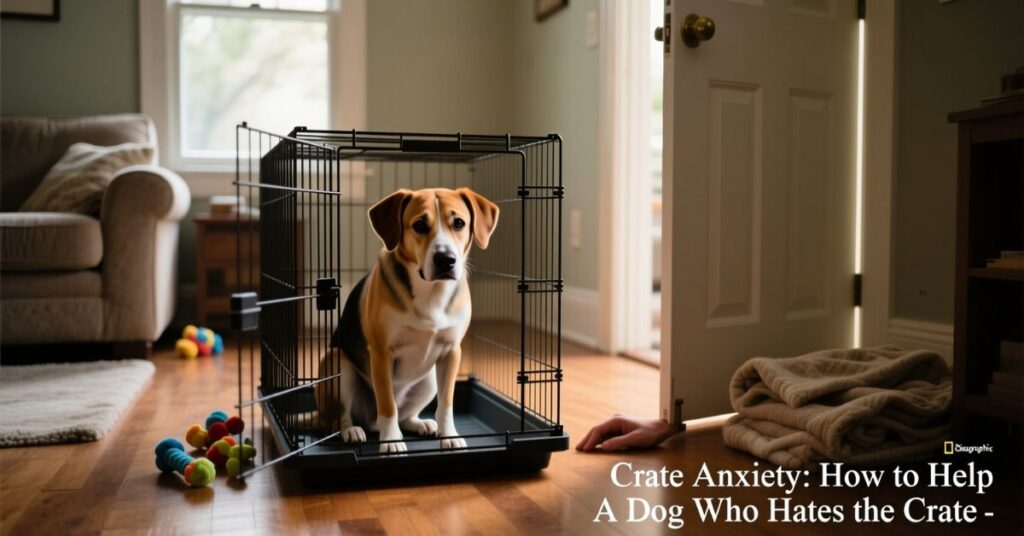
Dog anxiety in crate can be tough for both you and your pet. If your dog cries, scratches, or refuses to go inside, it’s showing fear or stress. Forcing the dog will only make things worse. Instead, start slow. Let your dog explore the crate on its own. Keep the door open at first and place a soft blanket or toy inside. The goal is to make the crate feel like a cozy, safe space, not a punishment.
Use calm energy and gentle encouragement. Reward your dog with praise or a treat when it chooses to go near or inside the crate. Spend short periods sitting beside the crate so your dog feels your presence. Over time, increase the time your dog stays in. Consistency and patience are key. With trust and positive experiences, your dog anxiety in crate can slowly turn into comfort and confidence.
Causes of Crate Anxiety
Dog anxiety in crate can happen for many reasons. Some dogs feel trapped or lonely when they are left alone inside. If a dog has not been slowly introduced to the crate, it may see it as a scary place instead of a safe one. Dog anxiety in crate can also start from bad past experiences, such as being locked up for too long or punished while inside. These moments can make a dog fear the crate and resist going in again.
Another common cause of dog anxiety in crate is lack of exercise or attention. When dogs have too much energy and no outlet, they become restless and stressed. Changes in routine, loud sounds, or uncomfortable bedding can make the anxiety worse. Some dogs with separation anxiety find it even harder to stay calm in the crate. Understanding what causes dog anxiety in crate is the first step to helping your dog feel more relaxed and secure.
Symptoms of Crate Anxiety
Dog anxiety in crate shows up in many different ways. Some signs are easy to notice, while others are more subtle. Your dog may cry, bark, or whine when left inside. Some dogs scratch or bite the crate, trying to escape. Others drool, pant, or shake because of stress. These are all signs that your dog feels trapped or scared in the crate.
You might also see changes in behavior or routine. A dog with crate anxiety may:
- Refuse to enter the crate
- Pace or circle inside the crate
- Lose interest in food or toys
- Have accidents in the crate even if potty trained
If you notice these symptoms of dog anxiety in crate, it’s important to stay calm and patient. Understanding these signs is the first step to helping your dog feel safe and comfortable again.
Separation Anxiety vs. Confinement Anxiety vs. Incomplete Crate Training
Dog anxiety in crate can be caused by different types of fear or stress. It’s important to understand what your dog is truly feeling so you can help in the right way. Some dogs panic when they are left alone,that’s separation anxiety. Others get scared only when confined in small spaces, that’s confinement anxiety. Incomplete crate training happens when a dog has not yet learned to feel safe and relaxed inside the crate. Each problem looks similar but needs a slightly different approach.
Here’s a simple table to help you see the difference between these three types of anxiety:
| Type of Anxiety | What It Means | Common Signs | How to Help |
| Separation Anxiety | Fear of being alone or away from the owner | Barking, whining, destroying items when alone, drooling | Practice short absences, build independence, avoid big goodbyes |
| Confinement Anxiety | Fear of being trapped or limited in space | Scratching or biting crate, pacing, panting, trying to escape | Create a larger, more open crate space, use calm training, never force |
| Incomplete Crate Training | Dog has not learned that the crate is a safe place | Hesitation to enter, whining at first, stress inside | Go slow with training, use treats and toys, make crate time positive |
By knowing the difference between these causes of dog anxiety in crate, you can better understand your dog’s behavior and choose the right steps to help them feel calm and secure.
Eight Tips to Reduce Dog Crate Anxiety
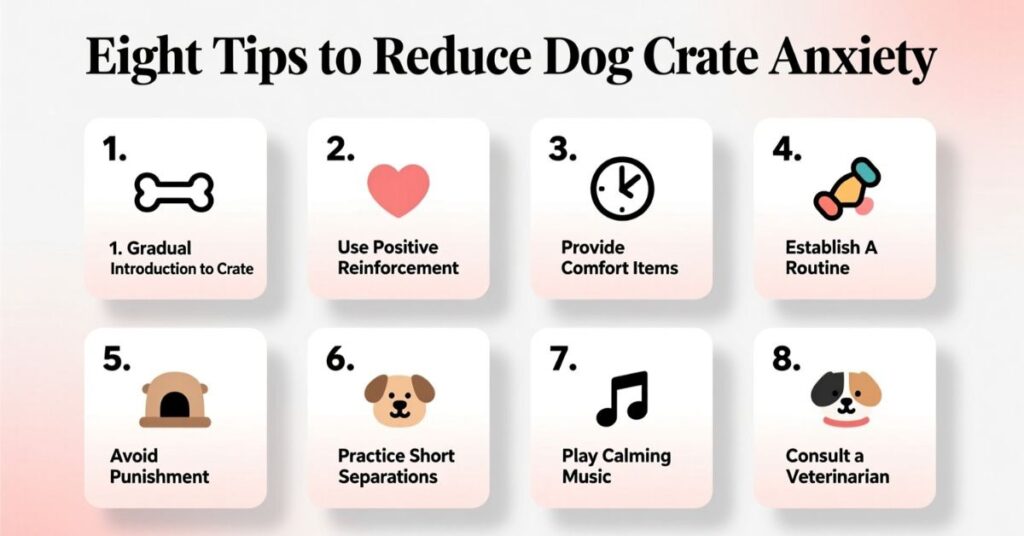
Dog anxiety in crate can be reduced with patience and positive training. The goal is to help your dog feel calm and safe in the crate. Start by choosing the right size crate, not too small or too big. Add a soft bed, blanket, or toy to make it cozy. Let your dog explore it freely without pressure. You can also place the crate in a quiet spot where your dog feels comfortable and close to the family.
Next, build positive feelings about the crate. Feed your dog near or inside it, and give treats when it goes in willingly. Keep crate sessions short at first and slowly increase the time. Never use the crate for punishment, and make sure your dog gets enough exercise and play before crate time. These simple steps can help turn dog anxiety in crate into confidence and comfort.
Choose the Right Crate
Picking the right crate can make a big difference in reducing dog anxiety in crate. A crate that’s too small can make your dog feel trapped, while one that’s too big can make them feel lost or unsafe. The crate should be large enough for your dog to stand up, turn around, and lie down comfortably. Comfort is key,add a soft blanket or bed to make it feel warm and inviting.
Different dogs prefer different types of crates. Wire crates allow airflow and visibility, while plastic ones feel more cozy and enclosed. If your dog gets nervous around noise or movement, a covered crate might help create a calm, den-like space. Always choose a crate that fits your dog’s size, personality, and comfort level. The right choice can turn dog anxiety in crate into peaceful rest.
Make the Crate a Positive Place
Dog anxiety in crate often happens because dogs see the crate as something scary or unfamiliar. To change that, you need to build happy feelings around the crate. Allow your dog to explore it freely without forcing them inside. Keep the door open and place treats, toys, or a comfy blanket inside. Speak in a calm, cheerful voice whenever your dog goes near or inside the crate. This helps your dog link the crate with safety and love, not fear.
You can make the crate a fun and rewarding space by doing simple things like:
- Feeding your dog meals inside the crate
- Giving favorite toys or chew treats only when in the crate
- Sitting nearby and praising calm behavior
- Playing short, positive crate games
When you make the crate a positive place, your dog starts to relax. Over time, dog anxiety in crate can fade away, replaced by trust and comfort.
Use Calm Departures and Returns
When you leave home, stay calm and kind. Say goodbye softly to your child. A quick hug and a smile help them feel safe. Do not rush or sneak away. This helps your child trust that you will always come back. Calm departures make mornings smoother and happier.
When you return, greet your child with warmth and attention. Bend down, smile, and say hello. Give them time to share their feelings. Show that you missed them too. Calm returns make your child feel loved and secure. This builds a strong bond every day.
Here’s a simple table showing what to do and what to avoid:
| Situation | What To Do | What To Avoid |
| Leaving home | Say goodbye calmly and clearly | Sneaking away |
| When child cries | Offer comfort and short reassurance | Getting upset or scolding |
| Returning home | Greet warmly with a smile | Ignoring your child |
| Building trust | Keep routines consistent | Changing plans suddenly |
| Daily practice | Stay patient and gentle | Rushing or raising your voice |
Provide Mental and Physical Stimulation
Children need both active play and thinking time. Give them toys that make them curious. Read books, tell stories, and ask questions. Simple games like puzzles or building blocks help their brains grow. When children use their minds often, they become more confident and creative.
Physical play is just as important. Let your child run, jump, and explore safely. Outdoor play helps build strong muscles and good health. Dancing, riding a bike, or playing ball keeps their energy balanced. When children move and think every day, they grow happy and strong.
Summary: Helping Your Dog Love Their Crate Again
Your dog’s crate should feel safe and cozy. Make it a happy place with soft bedding and favorite toys. Give treats when your dog goes inside. Keep the door open at first, so your dog feels free. Never use the crate for punishment. With patience and love, your dog will start to feel calm and secure inside.
Spend short, positive moments near the crate each day. Praise your dog for staying relaxed. Slowly increase the time they spend inside. Always stay gentle and kind. When your dog learns that the crate means comfort and rest, they will enjoy being there again.
ChatGPT said:
Conclusion
Helping your pet overcome dog anxiety in crate takes love and patience. Create a calm space where your dog feels safe. Use gentle words and kind actions every day. Give treats and praise for small progress. With time, your dog will learn that the crate is a place to relax, not to fear.
Stay patient and positive through the process. Keep routines simple and comforting. Avoid punishment or loud reactions. Celebrate little improvements with warmth and care. When you handle dog anxiety in crate with understanding, you build trust and happiness for your dog and your home.
FAQs
1. Why does my dog have anxiety in the crate?
Your dog may fear being alone or have had a bad past experience. It can also happen if the crate feels uncomfortable or unfamiliar.
2. How can I make my dog’s crate more comfortable?
Add soft bedding, favorite toys, and give treats inside. Make it a calm, cozy place your dog enjoys.
3. Should I force my dog into the crate?
No, never force your dog. Go slowly and reward calm behavior near or inside the crate.
4. How long does it take to fix crate anxiety?
It depends on your dog’s comfort and past experiences. With daily patience, progress usually happens within weeks.
5. Can exercise help reduce crate anxiety?
Yes, regular play and walks help release energy and reduce stress before crate time.
